The quick answer
Start the rebalanced starter horse with Caprilli tests, build confidence through calm desensitization work, and move to harder competitions when your horse can handle their demands. Watch the warning before unwanted gait changes, and use the difficulty and auto-jump options if timing is the obstacle.
Give the starter horse an achievable first competition
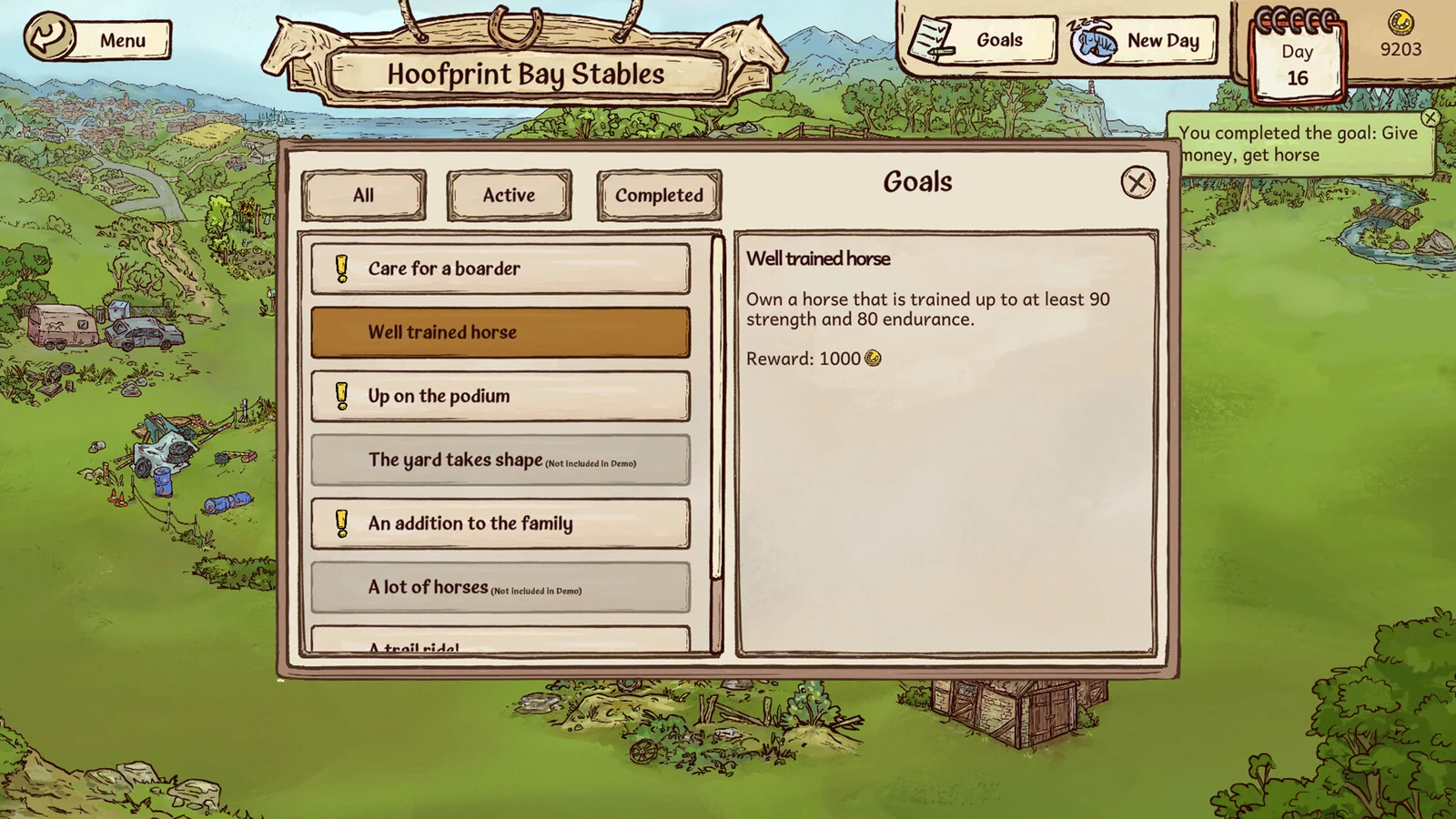
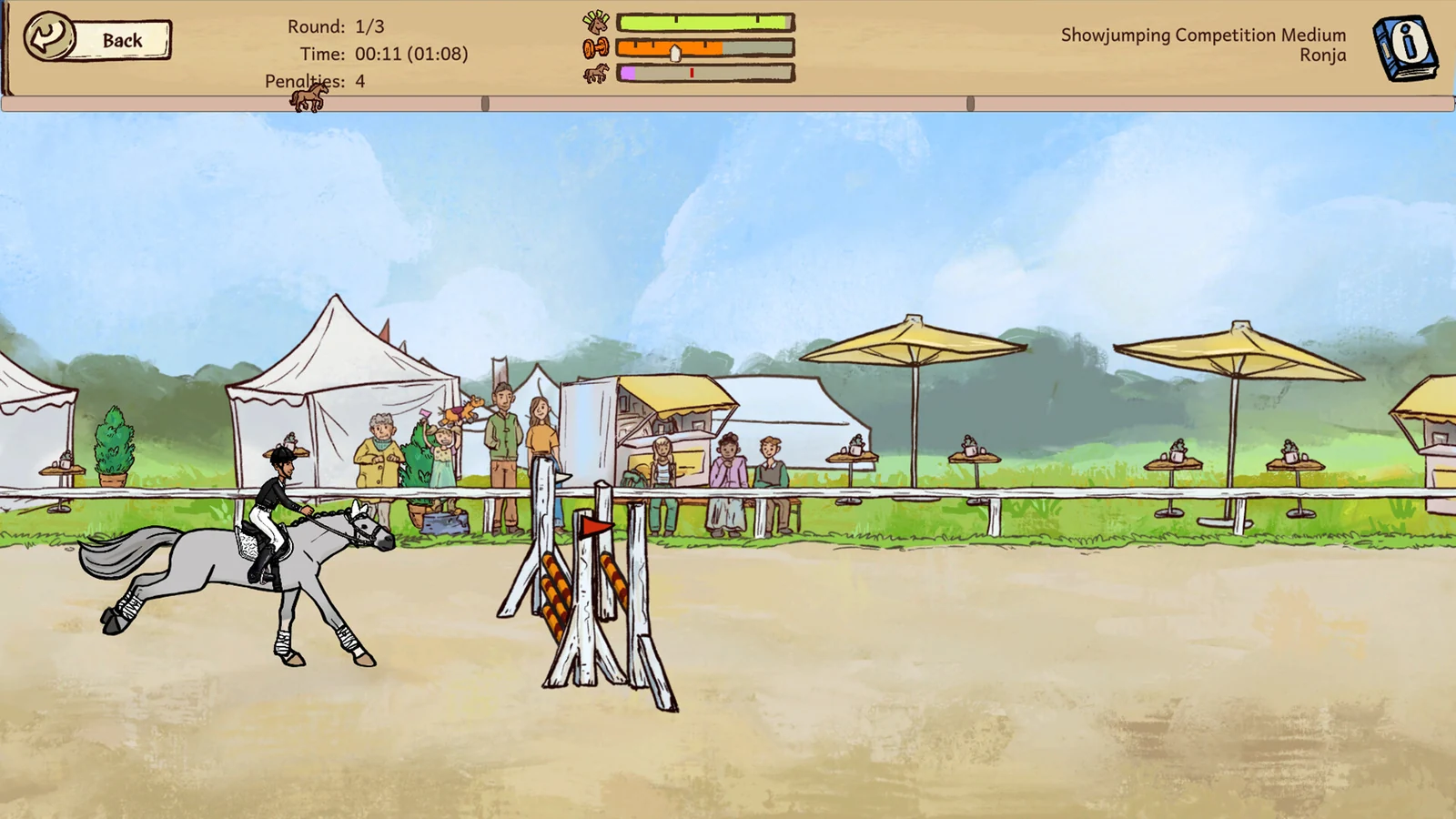
If you remember the February demo, adjust your expectations. The developers lowered starter-horse stats during development so that breeding stronger horses would remain a longer-term goal. They added Caprilli tests because even a fully trained starter horse would no longer reach the first show-jumping competition’s requirements.
Caprilli combines small jumps with accurate gait transitions. Use it to learn when to change pace and how to approach obstacles before moving to the more demanding disciplines. Repeatedly failing a harder class is a signal to reconsider the horse and preparation before another attempt.
Keep the three riding problems separate:
| Problem during a ride | Check first | Practical response |
|---|---|---|
| The horse unexpectedly speeds up or slows down | Confidence, warning icons and personality traits | Practice correcting gait changes and work on confidence |
| You struggle to finish demanding jumps or a longer course | The horse’s physical training and the competition selected | Return to an appropriate training course or choose an easier competition |
| You know what to do but cannot time the jump reliably | Difficulty and accessibility settings | Try easier competitions or the auto-jump option |
Confidence makes riding more manageable; it does not turn the starter horse into a high-potential competition horse.
Read the warning before the gait changes
Unwanted gait changes show a warning icon before they happen. That gives you a chance to correct the horse rather than reacting only after it has changed pace. Watch the horse and the warning during transitions; staring at the next jump alone can make you miss this earlier cue.
If a highly confident horse still sometimes changes gait, inspect its traits. The developers explicitly added personalities that can cause this even at full confidence. It is therefore worth checking the individual horse before assuming the confidence system has stopped working.
Use desensitization as a calm approach exercise
The desensitization course trains confidence by asking you to approach a frightening object while reading the horse’s reaction.
- Approach gradually and watch the horse rather than rushing straight to the object.
- Praise curiosity when the horse investigates.
- When the horse becomes worried, give it space and time instead of continuing to push forward.
- Resume the approach once you can do so calmly, then use the result to decide whether the horse is ready for a more demanding session.
The important distinction is curious versus worried. Rewarding curiosity and allowing a retreat make the exercise different from a speed challenge. Use your current control bindings for praise and movement; keyboard layouts and remapped controls can differ.
Check the exercise bar before repeating training. The training references describe exhaustion after crossing its red marker and a further injury risk if an exhausted horse is overworked again. Stop before that point. A confidence session is still part of the horse’s daily workload, alongside riding, competitions and other activity.
Treat cross country as a later step
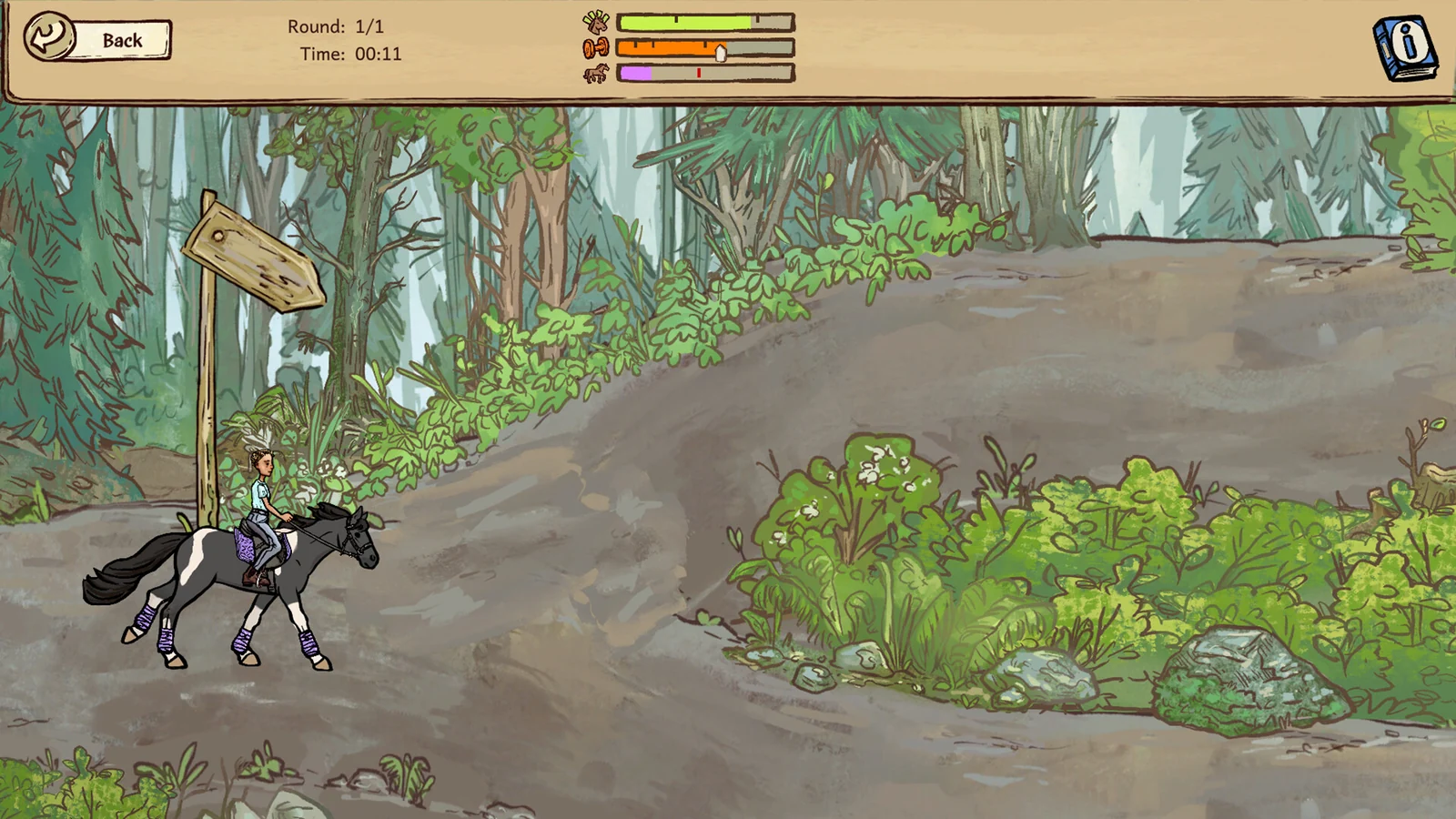
Cross-country competitions were added for horses with substantial strength and endurance. Some routes let you choose between a shorter path with harder obstacles and a longer path with easier jumps. Choose according to the horse’s remaining strength; the short route is not automatically the better route.
Maria, the retired competition rider added with this system, can provide feedback during training after you hire her. Use that feedback to identify what to change before entering another difficult competition.
If a timing barrier is making progression unpleasant, the official FAQ recommends experimenting with easier competitions and the auto-jump accessibility option. Difficulty settings also include increased Prestige gain. These are available ways to adjust your playthrough, so you do not have to keep repeating the same frustrating attempt.
Protect Prestige before chasing a bigger prize
Prestige connects riding to the rest of the yard. It influences the quality of horses offered by the breeder, the tack selection in the shop and which trail rides can be unlocked.
| Helps Prestige | Can reduce Prestige |
|---|---|
| Improving buildings | Failing competitions |
| Winning competitions | Competing on a dirty horse |
| Looking after boarders | Competing without appropriate clothing |
| Owning high-quality horses | Allowing horses to become seriously ill |
Before entering, check the horse’s care and your competition clothing as well as its training. If the next goal is a better horse from the breeder, protecting the yard’s reputation is part of that plan too.
Return to the daily stable checklist when growing care demands are getting in the way of riding. Returning from an old demo? The demo and save guide explains which progress carries over and why the starter horse may feel different.
More help with crafting & progression across our game guides.
Sources
- Starter-horse rebalance and Caprilli testsThogli Studios / The Mane Quest · Checked Nov 9, 2026
- Confidence, Prestige and Cross Country developer updateThogli Studios / The Mane Quest · Checked Nov 9, 2026
- Official FAQ: difficulty and auto-jumpAlice / The Mane Quest · Checked Nov 9, 2026
- Full-release review: Caprilli and riding changesThe Bridle Paths · Checked Nov 9, 2026
- Training stats and exercise referenceHorses of Hoofprint Bay Guide Wiki · Checked Nov 9, 2026
- Confidence training referenceWalkthrough Forge · Checked Nov 9, 2026