The quick answer
Check each horse’s food, water and health before choosing its work for the day. Brush and pick hooves, match training to the horse’s condition, then review your goals before spending on another horse or building. A larger herd needs care capacity as well as stable space.
Start with the horses you already own
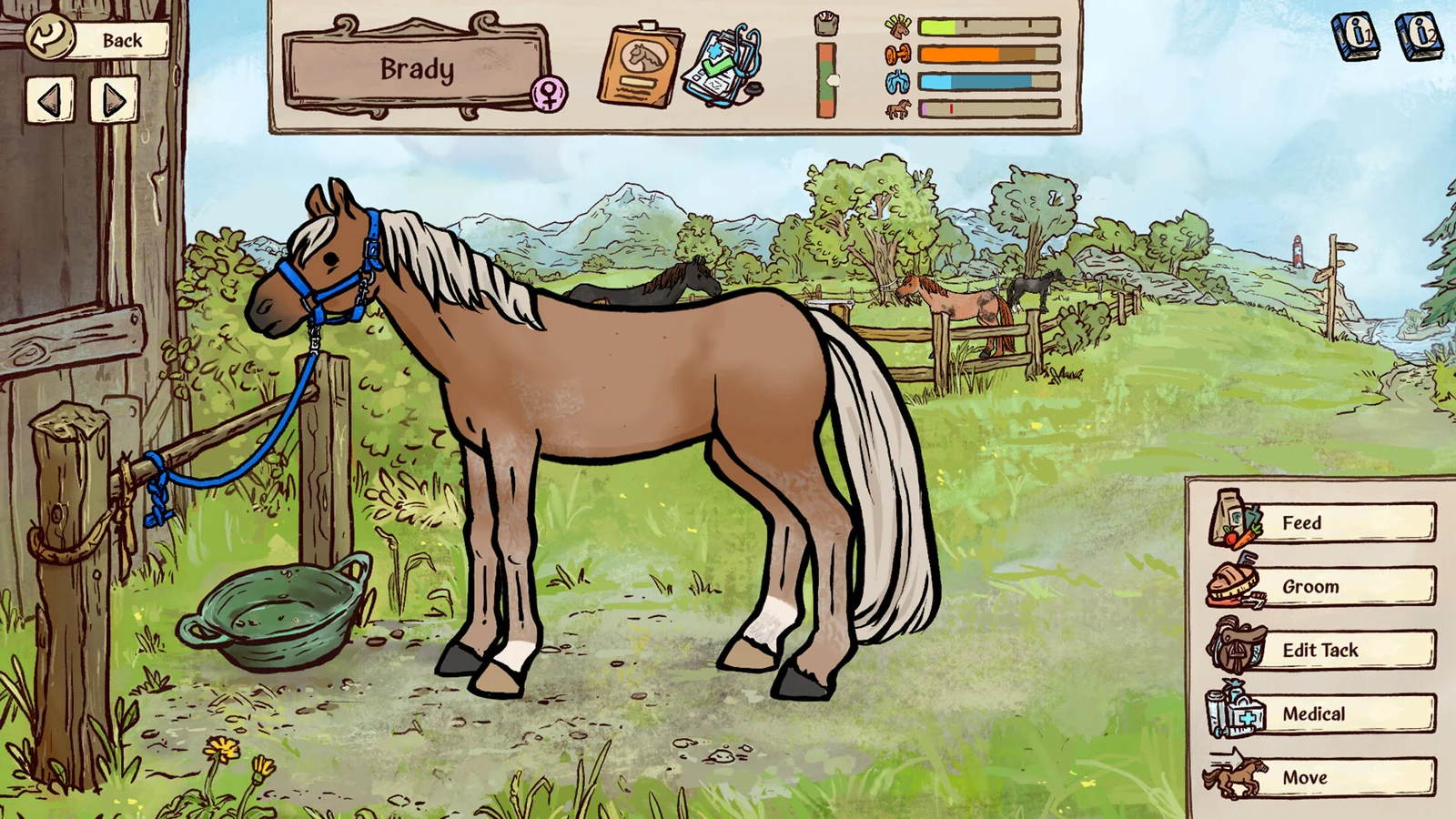
Your first yard is small, but care is already part of progression. Brushing and hoofpicking help prevent saddle sores and abscesses; existing scrapes and injuries need attention too. The game also expects you to keep horses fed and watered. Do those checks before deciding how much riding, training or paid work to fit into the day.
Use this order as a planning checklist, rather than a fixed schedule every horse must follow:
| Check | What to do next | Why it comes first |
|---|---|---|
| Food and water | Review the horse’s needs and the supplies available | Buying another horse also adds another animal to feed and care for |
| Coat and hooves | Finish grooming and hoof care before planning an outing | A dirty competition horse can cost you Prestige |
| Health | Check the horse’s condition and deal with the indicated problem | Serious illness is another way to lose Prestige; neglect can eventually lead to confiscation |
| Today’s work | Choose training, a lesson, a competition or a lighter day for that horse | The same horse cannot work indefinitely |
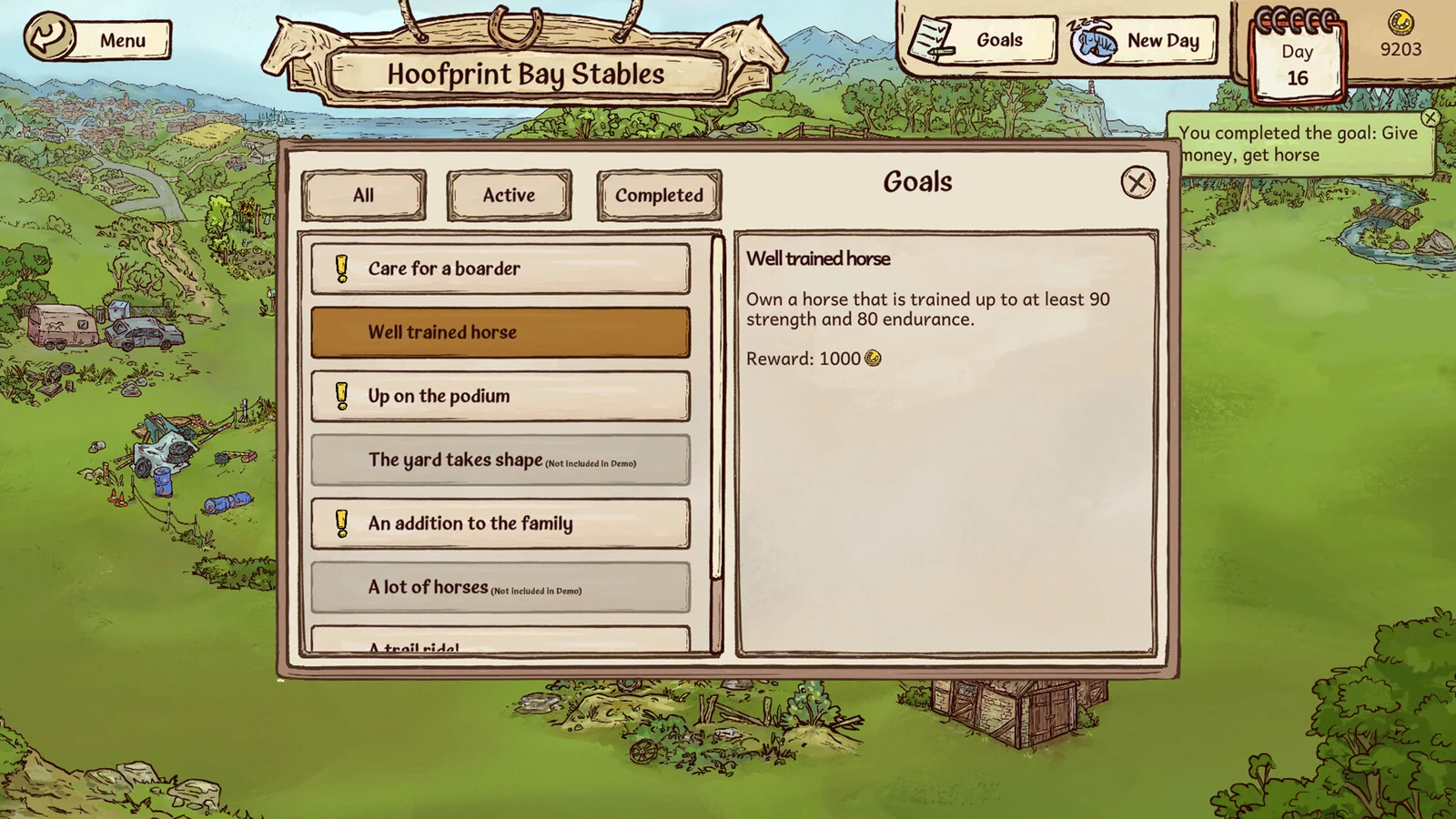
| Yard goals | Review the current objective before committing the remaining money | Goals guide the early progression rather than asking you to buy everything at once |
This order keeps expansion from hiding an existing problem. An empty stall is room for a horse; it is not proof that you have enough time, supplies or staff to care for one.
Keep training and earning money in the same plan
Lessons, boarders and competition prizes give the early yard different ways to earn money. They also create different responsibilities. Boarders add care work, while lessons and competitions add work for the horses involved. A useful next purchase is one that lets you support those responsibilities reliably.
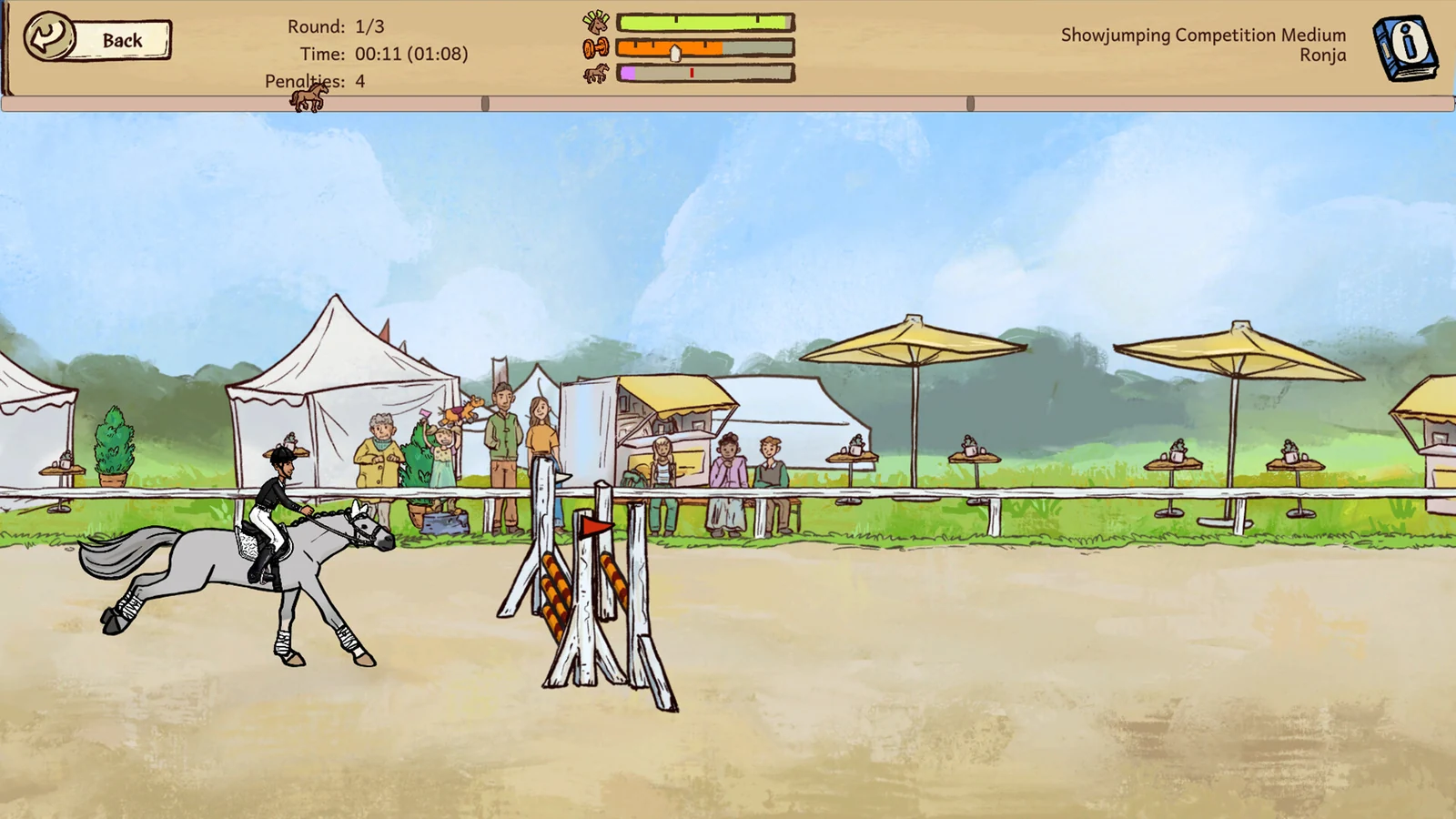
If you want to enter a competition, choose that horse’s work first. Avoid filling its day with other activities and only then deciding to compete. If your yard is becoming difficult to manage, stabilize the daily routine before bringing home another animal.
You also do not need to force the starter mare into the first show-jumping class. The developers rebalanced starter horses and added Caprilli tests as an earlier competition step. Follow the training and competition route when the care routine is under control.
Choose an upgrade for the problem it solves
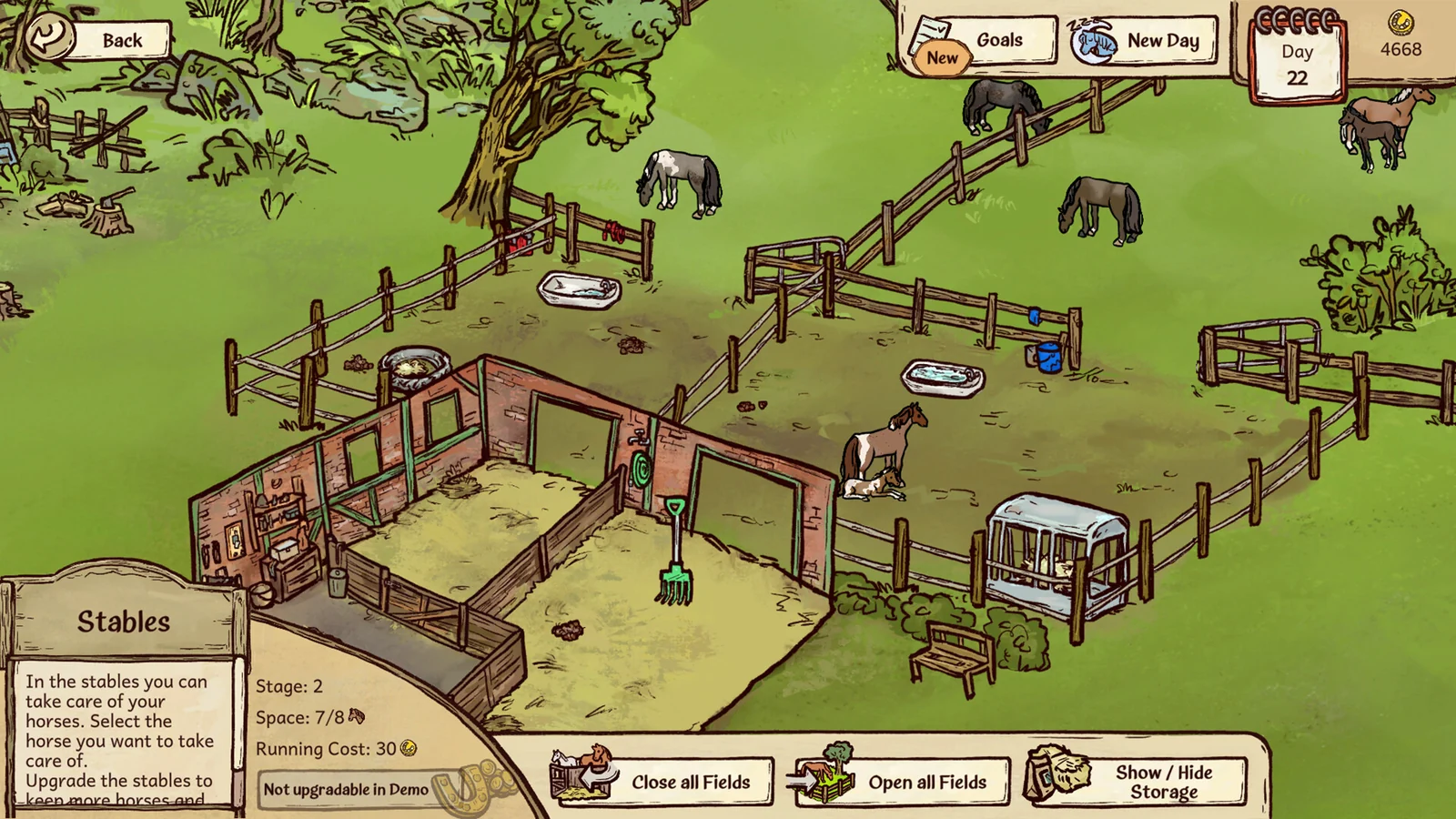
Building improvements do more than change the yard’s appearance. The full game’s later stages expand horse accommodation and unlock training courses, staff applications and breeding facilities.
Before buying, decide which of those you need next:
- More horses: make sure you can support additional daily care as well as additional accommodation.
- A training barrier: inspect what the relevant building stage unlocks before spending elsewhere.
- Too much manual work: look at staff and their assignments before expanding the herd again.
- A breeding project: plan space and ongoing care for the mare and foal before investing in the advanced lab.
The staff overhaul added assignments for care, training and lessons. After hiring, check who is assigned to which horses and which task. A hire only helps the part of the routine you have actually delegated.
Watch individuals, not just the herd average
Horse traits can affect dirt accumulation, susceptibility to injury and unwanted gait changes. Two horses therefore may need different attention even when you give them the same routine. If one animal repeatedly has a problem, inspect that horse’s traits and condition before replacing the whole stable’s plan.
Having a foal can reduce a mare’s stats. Version 1.0.2 reduced that stat loss for low-endurance horses after release feedback; it did not announce the removal of stat loss altogether. Keep the game updated before comparing your mare with an older launch-week example.
Separate a care mistake from an interface bug
The November 8 patch fixed picking up two draggable objects at once, including brushes and feed, and improved the way hay-rack fill levels are displayed. Update to v1.0.2 before treating either symptom as something your care routine caused.
For an actual horse-health question, use the relevant unlocked entry in the in-game library. For a riding problem, continue with confidence, competition choice and Prestige. If you are bringing a demo yard into the full game, check which saves transfer and what the latest patch can repair.
More help with farming & animals across our game guides.
Sources
- Horses of Hoofprint Bay: current game systemsThogli Studios / The Mane Quest · Checked Nov 9, 2026
- Beach Rides, Leopard Patterns and Staff OverhaulThogli Studios / The Mane Quest · Checked Nov 9, 2026
- Prestige, horse traits and training changesThogli Studios / The Mane Quest · Checked Nov 9, 2026
- Official Frequently Asked QuestionsAlice / The Mane Quest · Checked Nov 9, 2026
- Full-release review: daily management and progressionThe Bridle Paths · Checked Nov 9, 2026
- First patch: v1.0.2Thogli Studios / The Mane Quest · Checked Nov 9, 2026